

By Polly Young
Our full group of 22 finally gathered on yet another sunny, crisp morning outside the revolving doors of the Hotel I Castelli with hugs, smiles and introductions – some of the Antiochians seeing each other again for the first time in nearly 50 years. Our guide Silvia ushered us on to the bus – state of the art and a third the size of the monster that carried students, faculty and staff around Europe for those three astonishing months in the fall of 1975. With our congenial, born-and-raised in Piemonte, wine expert at the mic – lecturing, laughing and shushing us – we were transported once again in time to those days on the bus, with John Ronsheim our own expert, shouting his insights and wisdom, sans microphone, to be heard.
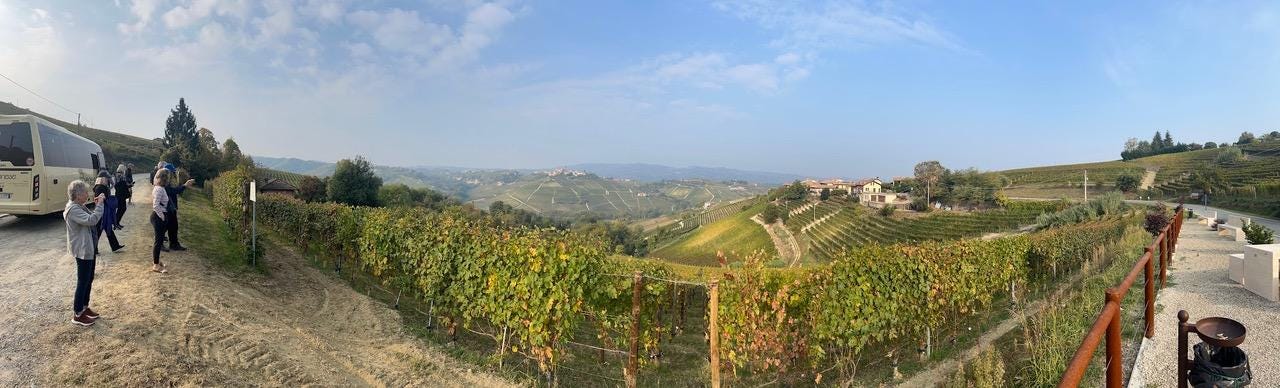
Silvia refreshed our knowledge of what John had so fervently emphasized – that it is the geological quality of the soil, the terra, that creates the nuances of difference in the same variety of grapes grown perhaps several hill districts away from each other and transforms through human skill and artistry the fruit into the hyper-localized and unique wines of the region. We drove through the steep hills covered every inch by vineyards, to the nearby town of Barbaresco, namesake and center of production of the fine red wine made from the noble nebbiolo grape and companion wine to the more robust Barolo. In her commentary on the history of wine and food traditions of the Langhe hills, and in anticipation of the fresh white truffles that we were to have later with our lunch, Silvia informed us that the Piemontese never have Barolo, the king of nebbiolo wine, with truffles, because one never has two divas present at the same event. You do not want one to overshadow the other!
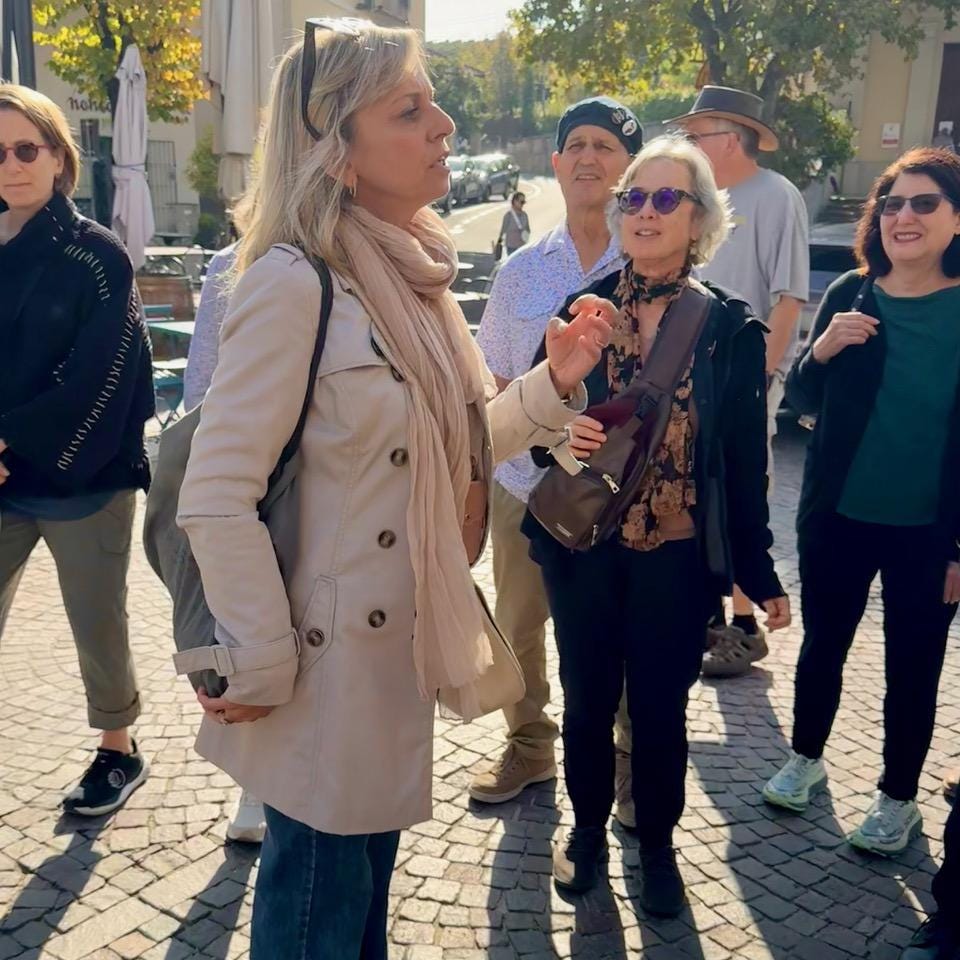
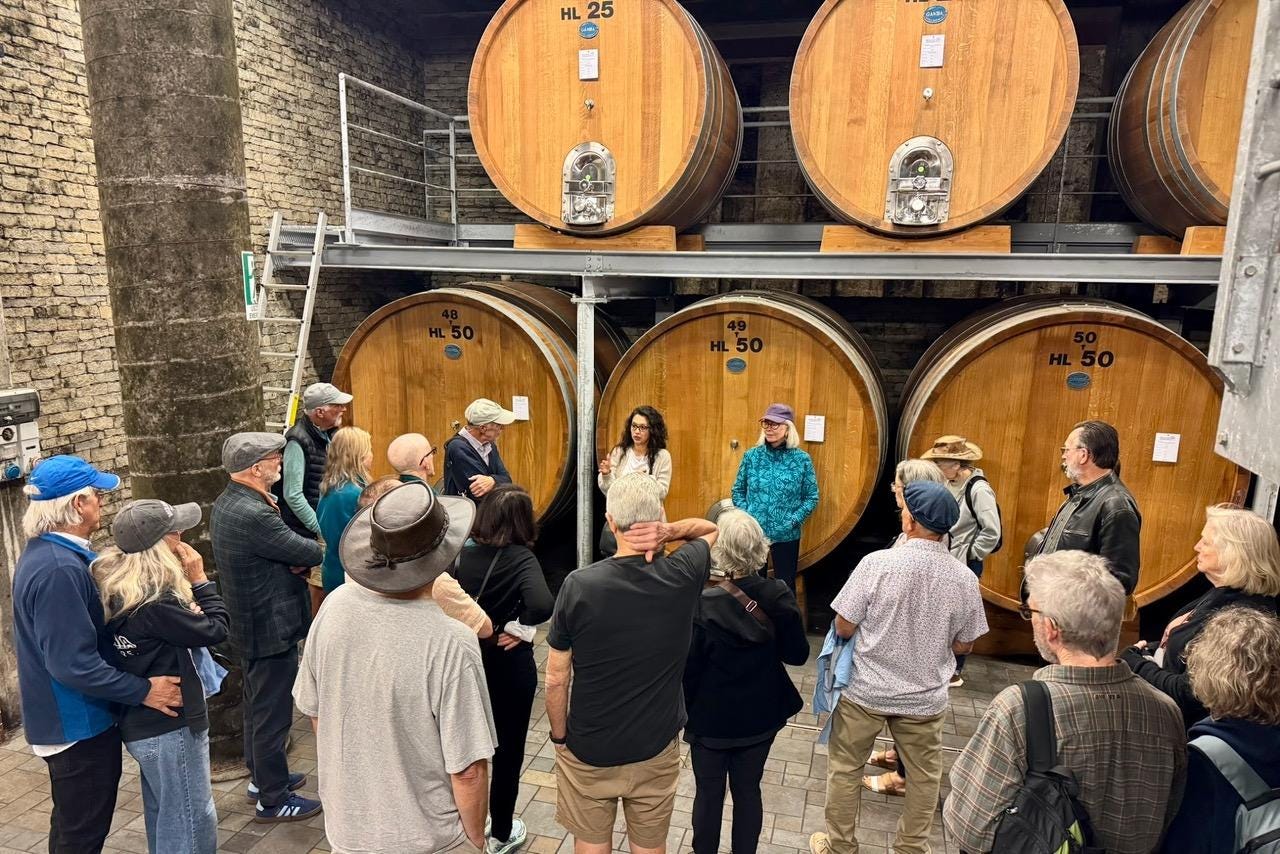
Our arrival at the cooperative winery, Produttori del Barabaresco, was met with winery guide and tasting leader Michela, a young woman following in her mother’s footsteps as a grower and member of the oldest agro/industrial coop in Italy, founded in the 1800’s and revived in its current form in the 1950’s. Exclusively growing and vinting nebbiolo grapes, they are especially known for their single vineyard riserva Barbarescos as well as their less complex but still delicious Barbaresco Classico and Nebbiolo delle Langhe.
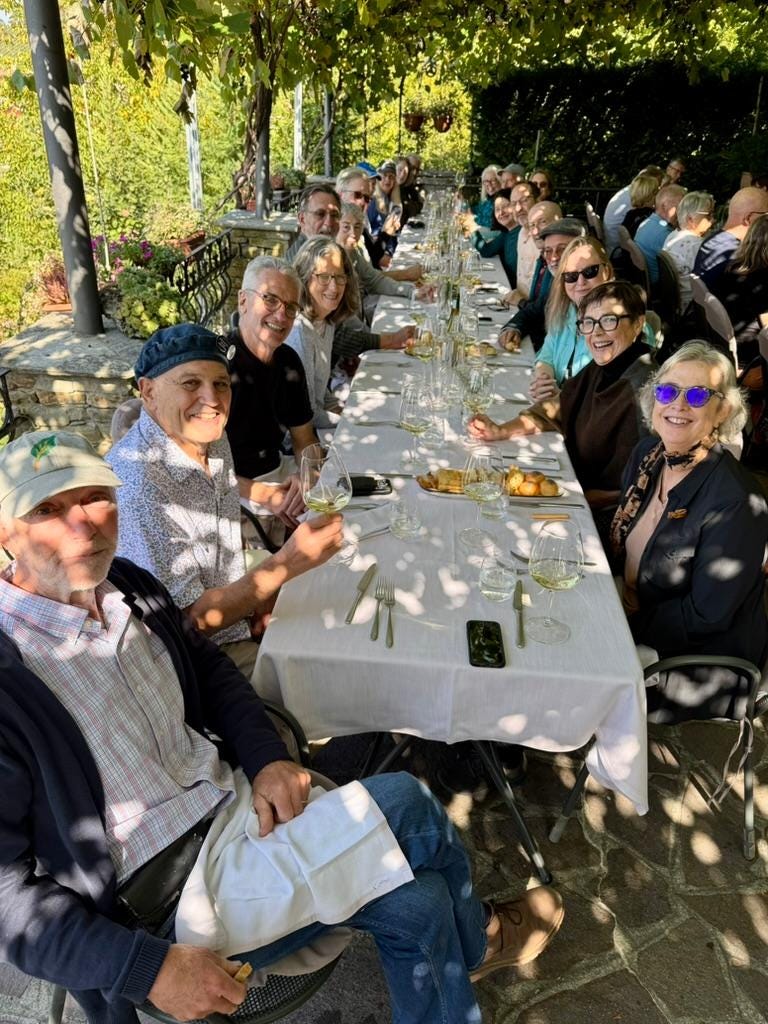
After our tour of the winery and formal private tasting of two Barbarescos and a Langhe Nebbiolo we made our way outside of town to the almost hidden on a hillside, Ristorante Rabayà, for pranzo, our main midday meal. Seated outdoors together at one long table under a grape arbor looking out over vineyards, we shared bread and wine, some of us including a shaving of newly foraged white truffles on the pasta course, filling the air with their pungent and indescribable aroma of earth and fungus. We shared stories of our families and travels and memories of Antioch as the food and wine became the catalyst for fellowship and community and the enjoyment of the art of life, just as John had emphasized to us during our intensive studies of music, fine art, cuisine and wine.
Carrying the after-glow of our morning experiences with us, we were soon delighted with the rustic beauty of our next stop – the medieval hill town of Neive, visible across the valley from Barbaresco and the location of more wineries and wine sellers. The views of the Langhe hills were stunning and one could easily see why the south facing vineyards would produce the ripest and highest quality grapes for the making of the best Barbaresco.
We returned to Alba by the quickest route possible, giving us time to rest and reflect before our only chance to try rehearsing the sections of our ‘75 tour repertoire that we had chosen to perhaps sing in La Morra the next day if the opportunity presented itself. Our efforts to find an acoustically suitable location and reserve it before arriving in Alba had failed, partially because of the International Truffle Festival taking place from early October through December and partly because the nature of our request was difficult to convey (in both English and Italian) bringing to mind the monumental undertaking the original tour planning must have been for John and the AEA (Antioch Education Abroad) department! Fortunately, the local host of several of us who were not staying at the hotel, came through by asking a friend to keep a small 18th century church in the historic city center open just for us and fully available past its normal public hours.
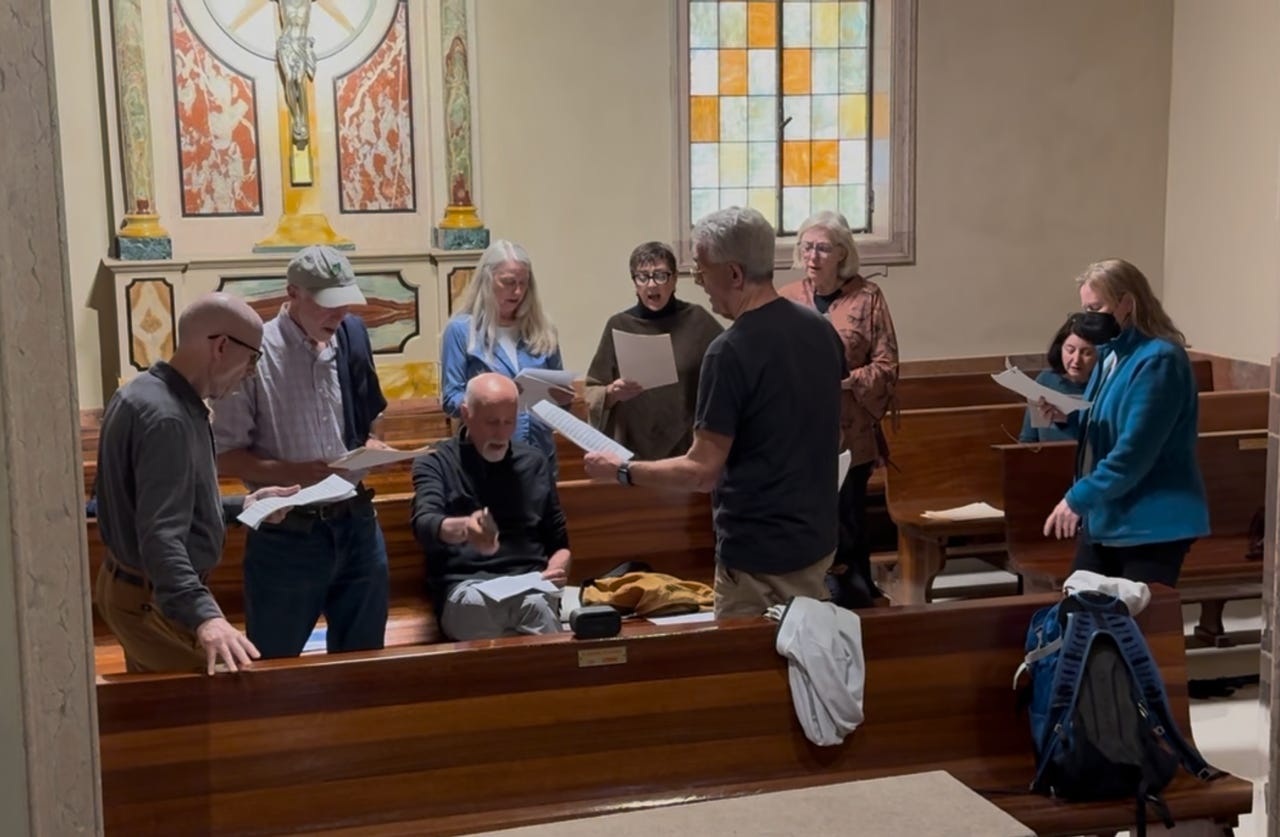
We chose the choir section behind the main altar, cued up the recording of the ‘75 chorus as a potential aid and then realized how awkward it was to situate ourselves and get ready to sing some of the most complex choral music ever written – without a leader. Without John. It was hard. We were awful. Every one of us struggled to find our best voice and tune to each other. So the volume was turned up just enough on the recording and we had the uncanny sensation of singing along with our younger selves – the small church resonating with the polyphonic, other-worldly beauty of Ockeghem and Dunstable. We left hoping that if we did indeed have a chance to sing in the church in La Morra the next day we would do it justice. Then we split up into the night, just like we often did during our original tour, some to rest, some to wander the town, some to find pizza or fried porcini mushrooms and continue the conversations of the day around the warmth of a communal table.